Verified AI Toy Supplier · Onsite-checked by TÜV Rheinland · CE Certified · Worldwide B2B Export
[email protected] English
  • English
  • Español
  • Français
  • Deutsch
  • Русский
  • Português
  • العربية
  • 日本語
0%

A smart robot dog can do more than walk, bark, or wag its tail. Depending on the model, it may respond to voice commands, follow a person, perform tricks, or support basic coding activities. Some feel like lively companions. Others are better understood as programmable toys. The difference matters.

A child may care most about easy controls and a sturdy body. A hobbyist might prefer sensors, coding options, and room to experiment. Adults shopping for a gift may value simple setup and dependable app support. Not every feature works equally well in every home. That’s worth remembering.

This guide compares seven smart robot dogs available or relevant in 2026, using practical criteria such as interaction, build quality, learning value, ease of use, and ongoing support. It also considers details that product listings can gloss over: battery life during active play, replacement parts, setup requirements, and whether an internet connection or companion app is needed. Those small details can shape the experience.

Product names, prices, and software features may change, so check current manufacturer information before buying. A polished demonstration video is not the same as everyday use on a carpeted floor. The picks below are intended to help readers match a robot dog to their needs, not to promise that one model suits everyone. Some trade-offs are unavoidable. The best choice is the one whose real capabilities, costs, and limitations make sense for the person who will use it.
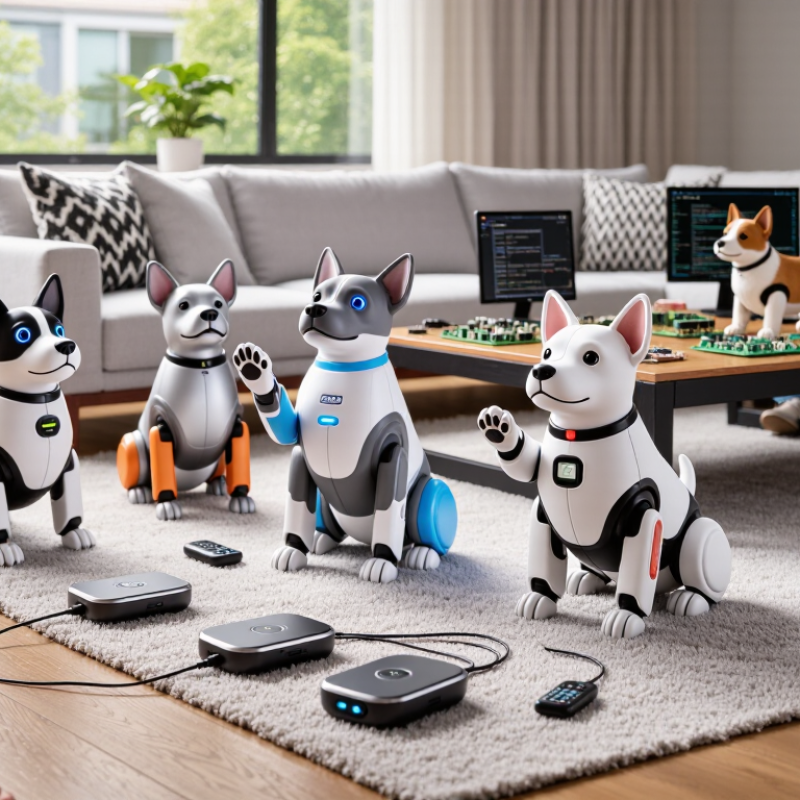
What Are the 7 Best Smart Robot Dogs in 2026?

Define Smart Robot Dogs by Role: Companions, STEM Tools, and Inspectors

Smart robot dogs serve different jobs, so “best” depends on what you need. As companions, they respond to touch, movement, or spoken cues. A child might ask one to follow across the living room, then watch it pause near a chair leg. That small moment can feel charming. It can also reveal a limitation: sensors may miss dark objects or clutter.

For STEM learning, look for clear controls, adjustable behaviors, and safe ways to test ideas. A student could change a movement sequence, observe the result, and revise it. Simple experiments matter. Good learning tools explain cause and effect, rather than hiding every function behind an app. Check whether setup suits the learner’s age and patience; fiddly calibration can drain the fun quickly.

Inspection models have another purpose. They may carry cameras or sensors through spaces that are awkward for people to reach, such as under a low platform. Their usefulness depends on lighting, floor texture, battery life, and the quality of the captured data. They do not replace trained judgment. A robot can flag a loose cable, but a person still needs to assess what the image cannot show. Some models blur these roles, which is convenient, but rarely means they excel at all three.

Frame the Market: IFR Reports 205,000 Professional Service Robots Sold in 2023

Smart robot dogs are entering a wider service-robot market, but market growth does not prove that every model is useful. The International Federation of Robotics (IFR), in World Robotics 2024, reported nearly 205,000 professional service robots sold worldwide in 2023, up 30% from 2022. Transportation and logistics robots accounted for about 113,000 units. A useful benchmark. Yet these figures cover many robot types, not quadruped dogs alone.

For buyers comparing the seven best smart robot dogs in 2026, the data gives context, not a ranking. Check whether a machine can cross a doorway threshold, keep balance on uneven flooring, and return reliably when its battery runs low. Look for clear information on operating time, sensor performance, payload, and software support. A polished demo is not enough. Real floors are messier.

IFR’s figures show that businesses are adopting service robots, but they cannot tell us how many robot dogs were sold or how well they perform over time. That gap matters. A careful comparison should separate advertised autonomy from tested capability, and note where evidence is thin. In this fast-moving market, the “best” choice may depend more on the task and support available than on impressive movement alone.

What Are the 7 Best Smart Robot Dogs in 2026? - Frame the Market: IFR Reports 205,000 Professional Service Robots Sold in 2023

Market context: The International Federation of Robotics (IFR) reported approximately 205,000 professional service robots sold worldwide in 2023. This figure covers professional service robots across multiple categories; it is not a sales count for quadruped robots alone. The profiles below are use-case recommendations, not a brand or model ranking.

Use-case profile Best suited for Useful capabilities Key limitation to check Selection priority
1. Industrial inspection Routine checks in industrial facilities and other areas that are difficult or repetitive for staff to access. Camera and sensor payload options; repeatable routes; remote operation and inspection records. Confirm that sensors suit the inspection task and that the robot can operate safely around people and equipment. Sensor compatibility, route repeatability, and integration with inspection workflows.
2. Security patrol Scheduled patrols and remote visual checks across managed sites. Mobile cameras, teleoperation, route planning, and event reporting where supported. Autonomous navigation does not replace human judgment, emergency response, or site security procedures. Reliable communications, privacy controls, and clear human escalation.
3. Public-safety assessment Remote visual assessment of hazardous or unstable locations before personnel enter. Remote driving, live video, and the option to carry task-specific sensors. Rubble, stairs, heat, water, and radio interference can limit operation; suitability depends on the environment. Tested terrain performance, communications resilience, and operator control.
4. Construction-site documentation Capturing repeatable visual records of active construction areas. Mobile imaging; repeat visits along planned routes; potential integration with mapping workflows. Changing site layouts, dust, obstacles, and moving machinery can disrupt routes and data consistency. Image quality, route adjustment, and compatibility with the project’s documentation tools.
5. Research and education Robotics labs, teaching, and prototyping in legged locomotion or autonomy. Programmable control interfaces and access to development tools, where provided. Available software access and documentation vary; a closed interface may restrict experimentation. Development access, safety features, documentation, and support for the intended curriculum.
6. Outdoor and agricultural monitoring Remote observation across outdoor sites where wheels may be less suitable for some terrain. Legged mobility, onboard imaging, and remote operation for site observation. Soft ground, mud, vegetation, weather, and battery logistics may affect performance. Field-tested mobility, environmental protection, and practical charging arrangements.
7. Telepresence and interaction Remote viewing, demonstrations, and supervised interaction in controlled environments. Mobile camera viewpoint, remote control, and optional interaction features. A robot dog is not a substitute for a trained assistance animal or an unsupervised care provider. Safe interaction design, accessible controls, and transparent privacy settings.

Source: International Federation of Robotics, World Robotics 2024 — professional service robot sales reported for 2023. Use-case profiles are general selection guidance; capabilities vary by system and configuration.

Compare Seven Models by Price, Runtime, Mobility, AI, and Repairability

Compare seven robot-dog profiles, treating these price and runtime bands as rough shopping estimates, not verified 2026 quotes: toy quadruped, $100–$500 and 30–90 minutes; STEM mini, $500–$2,000 and one to two hours; companion model, $1,000–$4,000 and one to two hours; camera patrol unit, $2,000–$6,000 and one to three hours. A programmable developer platform may cost $5,000–$20,000, while research and industrial platforms can exceed $20,000. Their runtime depends heavily on payload and terrain. Check the test conditions. The International Federation of Robotics’ World Robotics 2024 report recorded nearly 205,000 professional service robots sold in 2023, up 30% year over year. That figure covers the wider category, not robot dogs alone.

Mobility separates these profiles more than simulated personality does. Toy models suit smooth floors; research platforms may handle uneven ground, but stairs remain a hard test. Basic units repeat scripted motions, while developer systems can support custom programs and sensor-based navigation. Camera patrol models need clear privacy controls and reliable connectivity. Repairability is easy to overlook. Ask whether batteries, feet, motors, and cables can be replaced, and whether service manuals are available. A low price can hide costly repairs. One caution: advertised runtime rarely matches continuous walking with sensors active. For a fair comparison, request a timed test on the surface you actually plan to use.

7 Smart Robot-Dog Options Compared (2026)

A brand-free comparison of representative robot-dog models and configurations. The chart scores affordability, runtime, mobility, AI capability, and repairability on a 0–100 scale; higher is better.

Profile Typical listed price (USD) Approx. runtime per charge
A · Companion$2,900Up to 2 hours
B · Entry coding kit$350About 1 hour
C · Education quadruped$2,700Up to 2 hours
D · Prosumer quadruped$1,600Up to 2 hours
E · Research quadruped$15,000About 1.5 hours
F · Mini education kit$600About 1 hour
G · Industrial quadruped$75,000About 1.5 hours

Prices and runtimes are approximate and depend on configuration, battery, and workload. Affordability and runtime scores are normalized within this comparison; mobility, AI, and repairability scores are editorial assessments based on capabilities, software access, and parts/service practicality. Confirm current specifications with the seller before purchase.

Benchmark Performance Against Spot’s 90-Minute Runtime and 14 kg Payload

When comparing seven smart robot dogs in 2026, use a 90-minute runtime and 14 kg payload as demanding reference points. These figures help separate impressive demonstrations from useful field performance. Check whether runtime was measured on level floors, at low speed, or with sensors and cameras active. A machine that walks for an hour on a smooth test course may last far less on ramps or rough ground.

Payload claims also need context. Ask whether 14 kg means a centered, secured load, and whether the robot can still turn, climb, and stop safely while carrying it. Request test conditions, battery details, and repeat-run results. Small differences matter: a warm battery, loose gravel, or frequent stops can change a workday. That benchmark is useful, but not the whole story. I would still want to see a real route test before trusting a spec sheet.

Tips: Compare runtime with the intended load attached. Check recovery after repeated trips, not just one run. Keep a little margin. A robot that barely meets the benchmark may disappoint in daily use.

Assess Battery and Robot Safety Against IEC 62133-2 and ISO 13482

For “What Are the 7 Best Smart Robot Dogs in 2026?”, safety deserves more than a battery-capacity comparison. IEC 62133-2:2017+A1:2021 covers portable sealed lithium cells and batteries, with tests including external short circuit, thermal abuse, vibration, and mechanical shock. Ask for a test report matching the robot’s actual battery pack—not merely a cell inside it. A pack can behave differently once fitted beside motors, wiring, and a warm charging dock.

ISO 13482:2014 sets safety requirements for personal care robots and addresses hazards linked to robot movement and human contact. Its relevance depends on a product’s intended use and design; a playful robot dog is not automatically covered or certified. Check whether safety documentation identifies pinch points, unexpected starts, obstacle contact, and safe stopping. A low-speed tail wag seems harmless, until a small child puts fingers near a joint. Standards help frame questions. They do not replace product-specific testing.

Tips: Request the battery’s IEC 62133-2 test summary, charging instructions, and evidence of robot-level risk assessment. Compare charging time and runtime under realistic use; manufacturers may measure them under different conditions. Look for clear temperature limits and stop-use guidance if the casing swells, smells unusual, or becomes hot. A tidy specification sheet still leaves gaps. Ask who performed the tests and what configuration they tested.

FAQS

What can a smart robot dog do?

It can offer companionship, support STEM activities, or inspect hard-to-reach spaces. One model may not excel at every role.

Are robot dogs good companions for children?

Some respond to touch, movement, or spoken cues. A child might ask one to follow across a living room. It may still miss dark objects or clutter.

What features help with STEM learning?

Look for clear controls and adjustable behaviors. Students can change a movement sequence, observe the result, and revise it. Setup should suit their age and patience.

How much do different robot dogs cost?

Rough estimates range from $100–$500 for toy models to over $20,000 for some research or industrial platforms. Prices vary. Check current offers.

How long can a robot dog run?

Typical estimates range from 30 minutes to three hours, depending on the model. Sensors, payload, and terrain can shorten runtime. Test it yourself.

Can robot dogs handle stairs or rough ground?

Mobility varies by model. Toy versions generally suit smooth floors, while some research platforms handle uneven ground. Stairs remain difficult.

Can an inspection robot replace a trained person?

No. It may flag a loose cable or capture images beneath a low platform. A person still needs to judge what the images cannot show.

What should I check before buying one?

Ask whether batteries, feet, motors, and cables can be replaced. Check for service manuals and privacy controls. Repairs can cost more than expected.

Conclusion

A smart robot dog can serve as a home companion, a hands-on STEM learning tool, or a mobile inspector for structured environments. This guide compares seven models across price, operating time, mobility, AI capabilities, and repairability, helping readers match a robot’s design to its intended use. The market context includes an industry report of 205,000 professional service robots sold in 2023, reflecting growing interest in robots beyond traditional factory settings.

To make comparisons practical, the guide considers how consumer and educational models measure up against a professional quadruped benchmark of 90 minutes of runtime and a 14 kg payload, while recognizing that smaller robots may prioritize affordability and ease of use. It also examines battery and operational safety, including the relevance of IEC 62133-2 and ISO 13482, so buyers can weigh performance alongside responsible design and maintenance.

Aurelia

Aurelia

Aurelia is a dedicated marketing professional with a strong understanding of product strategy, customer needs, and the evolving demands of modern markets. As a key contributor to the company’s communications team, Aurelia regularly publishes insightful, practical articles on the company website,......