Sourcing AI toys for global markets demands more than attractive features and a competitive factory quote. Buyers must connect product design with child safety, data protection, quality control, and local demand. A talking dinosaur may delight children in London, yet confuse families in Tokyo if its voice settings feel unnatural. Its battery compartment, microphone behavior, and charging instructions deserve the same attention as its packaging. Children notice quickly.
A dependable sourcing process starts with verified manufacturers, clear technical specifications, and traceable samples. It should examine firmware updates, content moderation, parental controls, and offline functions before production begins. Independent laboratory testing can help assess mechanical hazards, electrical safety, radio performance, and restricted materials under applicable market rules. Requirements differ across markets. Request current test reports. Then verify their scope. Review sample logs, supplier audits, and escalation contacts before signing a purchase order. Keep records.
Experienced teams also compare language quality, cultural expectations, after-sales support, and replacement-part availability. A low unit price can become expensive when returns fill a warehouse or updates stop after launch. Plans fail. Some assumptions will fail, especially when children use products differently from test groups. That weakness deserves honest review, not polished promises. This guide presents practical questions for selecting AI toys responsibly, scaling production, and building trust across markets. Reliable growth starts with evidence, careful testing, and suppliers willing to disclose limitations.
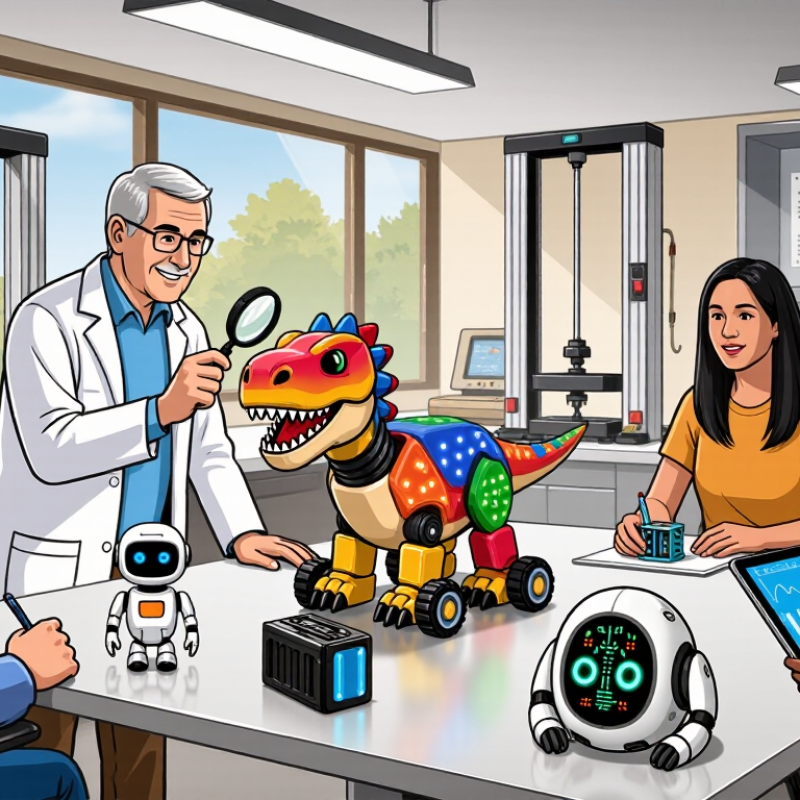
Defining the target market is the real starting point for sourcing AI toys globally. In practical sourcing work, I examine age groups, household income, language, education habits, and screen access. A learning toy for urban families may need bilingual speech, while a rural market may value offline functions and long battery life. These differences change the factory brief.
Use cases should be specific, not decorative. Will children practise pronunciation, solve puzzles, create stories, or learn daily routines? A clear use case guides microphone quality, response speed, voice design, and safety controls. For younger users, avoid open-ended features that may produce confusing answers. Test conversations with children, parents, and teachers in the target language. Short sessions reveal problems quickly.
Market research must also include privacy expectations, age grading, electrical requirements, packaging rules, and local consumer protection standards. Supplier documents should explain data handling, material safety, software updates, and quality inspections. A sample that works perfectly in a showroom may struggle in a noisy kitchen. That happened during one product trial. We underestimated background speech and treated it as a minor issue. It was not. Repeated testing across homes, schools, and travel settings creates more reliable sourcing decisions, even when the early results are uncomfortable.
Sourcing AI toys for global markets requires more than comparing factory prices. Supplier evaluation should begin with documented production experience, test reports, and a clear bill of materials. Ask for pilot-run evidence, failure rates, firmware update records, and component traceability. Circana reported a 7% decline across tracked global toy markets in 2023, making cost control important, but cheap hardware can create expensive returns.
Technology must fit the child, not just the product brochure. Check speech recognition in noisy rooms, response latency, multilingual performance, and offline functions. IDC forecasts worldwide AI spending will reach about $632 billion by 2028, yet toy suppliers may lack mature AI integration. Test real samples with children under supervision. Short demos can hide weak microphones and repetitive answers.
Manufacturing capability also includes safety and data discipline. Verify testing against applicable ISO 8124 requirements, battery protection standards, chemical limits, and regional labeling rules. UNICEF’s Policy Guidance on AI for Children stresses privacy, transparency, and child-centered design. Suppliers should explain where voice data travels, how long it remains stored, and how deletion requests work. Cloud dependence worries me. I would still approve it sometimes, but only after reviewing access controls and recovery procedures. A supplier that cannot show a traceable corrective-action process is not ready for global scale.
Sourcing AI toys for global markets requires more than checking a factory sample. Safety, privacy, compliance, and age-appropriate design must be tested together. The European Commission’s Safety Gate 2023 report listed toys among the most frequently notified product categories, representing about 13% of alerts. This signals a practical risk: a charming prototype may still fail when materials, batteries, voice functions, or small parts are examined.
Privacy needs equal attention. UNICEF states that children make up roughly one-third of internet users worldwide. An AI toy should collect the minimum data needed, explain recording clearly, and offer a physical microphone mute option. Audio should not be retained by default. IBM’s Cost of a Data Breach Report 2024 placed the average global breach cost at 4.88 million US dollars. That figure concerns organizations generally, not toys alone, but it shows why weak supplier controls are expensive. Check encryption, deletion requests, parental consent, access logs, and data storage locations. Local rules differ, and a single compliance checklist can miss important details.
Tips: Ask suppliers for laboratory reports covering applicable toy-safety standards, radio equipment, batteries, and chemical limits. Test speech recognition with different accents and children’s voices. Review every answer for unsafe, frightening, or age-inappropriate content. Keep a human review step. It may slow launch, but rushed testing creates blind spots. Use clear age labels based on developmental ability, not only marketing preference. Age guidance should reflect language, emotional impact, privacy awareness, and supervision needs.
Child online privacy age thresholds relevant to connected and AI-enabled toys
The chart shows the age thresholds used by selected privacy frameworks when a toy collects, processes, or shares children’s personal data online. The European Union has a variable threshold of 13–16 depending on the Member State. These privacy thresholds should be assessed together with applicable toy-safety standards, data minimization, parental controls, secure defaults, and age-appropriate product design.
Sources: U.S. Children’s Online Privacy Protection Act; GDPR Article 8; UK Age Appropriate Design Code; China Personal Information Protection Law Article 31; India Digital Personal Data Protection Act, 2023.
How to Source AI Toys for Global Markets?
Sourcing AI toys globally requires more than comparing factory quotations. A lower unit price can hide tooling fees, software maintenance, testing, and returns. I recommend building a landed-cost sheet before requesting samples. Include production, inspection, insurance, duties, storage, and marketplace fees. UNCTAD reports that over 80% of global trade by volume moves by sea. Ocean freight is economical, but delays remain possible. The World Bank’s 2023 Logistics Performance Index found that international shipments take about 44 days across the supply chain. Plan safety stock accordingly.
Packaging affects both cost and customer trust. Use molded pulp, recycled paper, and compact cartons where protection allows. Oversized packaging wastes freight space and may increase damage. Eurostat reported 188.7 kilograms of packaging waste per person in the European Union in 2021. That figure deserves attention. Independent testing should cover child safety, batteries, wireless functions, and data protection. Requirements vary by destination, so one certificate may not satisfy every market. I have seen promising products delayed because packaging artwork lacked required information.
Tips: Compare three freight routes, not just three suppliers. Test cartons after vibration and drop trials. Keep spare packaging inserts. Use regional warehouses only after demand becomes predictable. Direct shipping reduces inventory risk, but delivery times can weaken reviews. Local distribution improves speed, yet storage costs grow quickly. My own cost models are rarely perfect. Currency changes and returns still surprise even experienced teams.
Testing must come before large orders. I usually request three samples from different production batches. Each sample faces repeated charging, button presses, drops, and voice commands. We record response time, sound quality, heat, and battery performance. Children may use toys roughly. The test must reflect that reality.
A scalable sourcing plan needs more than a low factory quote. Suppliers should provide material records, safety reports, firmware details, and clear production controls. Independent laboratories can check electrical safety, mechanical strength, chemical limits, and age-related risks. AI features also require careful data handling. Avoid collecting unnecessary recordings or personal information. Local language testing matters too. A toy can pass a technical test and still confuse families.
Build a small pilot order first. Track defect rates, packaging damage, delivery time, and customer questions by market. Then set acceptance limits before expanding volume. Keep at least one qualified backup supplier, but do not assume switching is simple. Components, software versions, and calibration may change. Our early spreadsheet looked reliable, yet it missed seasonal shipping delays and replacement costs. That mistake changed our planning. We now review forecasts monthly and inspect critical components before assembly. Progress should be measured, not guessed.
Request production records, laboratory reports, a bill of materials, and component traceability documents. Ask for pilot-run evidence and recorded failure rates. Gaps matter.
Test speech recognition in noisy rooms, with different accents, and with children’s voices. Measure response time and repeated answers. Short demos can mislead.
Check which features work offline and which require cloud access. Offline play can reduce service interruptions and data exposure. I would not approve cloud dependence without recovery procedures.
The toy should collect only necessary data and explain recording in simple language. Look for a physical microphone mute switch, encryption, access logs, and deletion controls. Audio should not remain by default.
Ask where recordings travel, where they are stored, and how long they remain available. Request a clear process for deletion requests and parental consent. Vague answers are a warning.
Request reports covering toy materials, batteries, chemical limits, radio functions, and small-part risks. Check battery protection carefully. Samples are not enough.
Review language, emotional effects, privacy awareness, supervision needs, and developmental ability. Do not rely only on a suggested age printed on packaging. Children may react unexpectedly.
Test many conversations and review responses for frightening, harmful, or confusing content. Keep a human review step before launch. The process may feel slow, but rushed testing creates blind spots.
Sourcing AI toys for global markets requires a structured approach that connects product design with the needs of specific customers and regions. Begin by defining target markets, age groups, educational or entertainment use cases, and local purchasing expectations. Then evaluate suppliers based on their AI technologies, product development experience, manufacturing capacity, quality control systems, and ability to support customization or large-volume production.
Before placing an order, carefully review safety standards, data privacy practices, compliance requirements, and age-appropriate design features. Compare total costs, including tooling, production, shipping, tariffs, packaging, warehousing, and distribution. Product samples and pilot orders should be tested for performance, durability, usability, and customer acceptance in each target market. Finally, build a scalable international sourcing plan with reliable communication, quality inspections, demand forecasting, and contingency options. This process helps buyers select dependable AI toys, reduce operational risks, and create a flexible supply chain capable of supporting long-term global growth.