For global buyers, an AI pet robot is no longer only a novelty on a living-room shelf. It can offer companionship, voice interaction, playful movement, and basic home engagement. These features matter in apartments, elder-care settings, classrooms, and households where real pets are difficult to keep.
Industry data suggests that consumer service robotics is expanding. The International Federation of Robotics reported approximately 5.1 million consumer service robots sold worldwide in 2022. This figure includes several categories, not only AI pet robot products. That distinction matters. It prevents inflated market claims. Grand View Research has also identified growing demand for social and companion robots, supported by artificial intelligence, voice interfaces, and connected devices. However, market definitions remain inconsistent. Buyers should examine product specifications, support policies, language coverage, and data practices carefully.
Dr. Cynthia Breazeal, an MIT social robotics expert, describes social robots as “robots that are designed to interact with people in a natural way.” Her observation explains the appeal of an AI pet robot: its value depends on interaction, not mechanical movement alone. A responsive robot that turns its head, follows a voice, or remembers a user’s routine feels more engaging than a simple electronic toy.
Still, the experience is not perfect. Speech recognition may struggle with accents. Battery life can disappoint. Some emotional responses may feel artificial. That is not necessarily a failure, but it requires honest expectations. Global buyers should compare independent reviews, warranty coverage, software updates, and regional compatibility before purchasing. The best choice is not always the most advanced model. It is the robot that fits daily habits, physical space, and human needs.
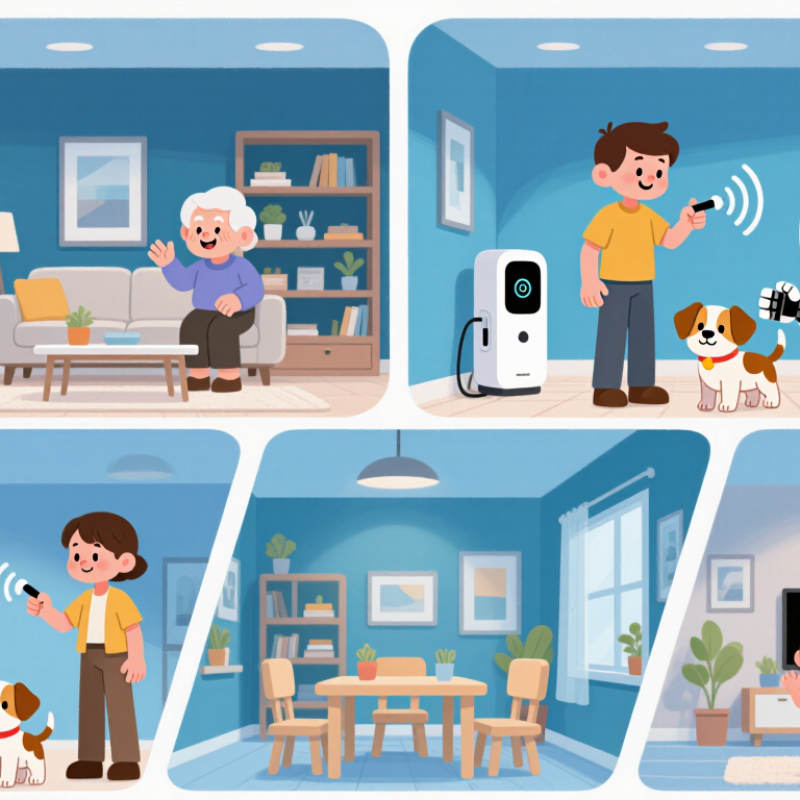
What Is an AI Pet Robot?
An AI pet robot is a small interactive machine designed to imitate selected pet behaviors. It uses cameras, microphones, touch sensors, motors, and artificial intelligence software. These systems can recognize voices, avoid furniture, respond to touch, and develop simple routines over time. They do not eat, shed fur, or require veterinary care. They are machines, not living companions.
The International Federation of Robotics reported nearly 200,000 professional service robots sold worldwide in 2023. Its World Robotics 2024 report also identifies consumer service robots as a significant application area. This growth helps explain global interest in AI pet robots. For buyers, the practical value is clear: a robot can provide movement, sound, and basic interaction inside apartments, offices, or care settings. Some models can remind users about routines. Others create playful responses through adaptive software.
The experience is not perfect. Voice recognition may fail in noisy rooms. Battery life can limit spontaneous play. Some functions may depend on internet access or software updates. That matters.
A reliable evaluation should examine sensor performance, data handling, charging safety, warranty terms, and repair access. The NIST AI Risk Management Framework recommends testing AI systems for reliability, transparency, privacy, and safety. Buyers should also ask where recordings are processed and how long they are stored. An AI pet robot can feel surprisingly responsive, but emotional attachment may exceed its actual understanding. This gap deserves honest attention.
FAQS
It offers companionship without feeding, walking, or managing animal allergies. No feeding required. Touch, lights, and sounds create a small presence on a desk or bedside table. It may also remind users about hydration, movement, or scheduled tasks.
Older adults, busy workers, and families in small apartments may find it useful. Children can use supervised play for storytelling and basic coding. Adults may use it as a gentle prompt for routines. It should not replace human contact.
Test voice commands, touch sensors, movement, camera performance, and response speed. Try the robot in both quiet and busy rooms. Does it understand your language? Repeated phrases can become annoying after several days.
Look for rounded edges, stable movement, obstacle detection, and automatic stopping. These features matter around children and pets. Check whether the robot becomes hot during charging. Small safety details matter.
Language support affects daily comfort and command accuracy. Speech recognition may misunderstand accents. Offline functions remain useful during travel or weak internet service. They also reduce dependence on a constant connection.
Check where recordings are stored and how accounts are protected. Confirm whether microphones, cameras, and cloud features can be disabled. Clear settings build trust. I would not assume privacy without reading the controls.
Check charging plugs, voltage compatibility, warranty coverage, and replacement-part availability. Confirm service access in your region. A robot may work well but become difficult to support later. That weakness is easy to overlook.
No. It cannot replace medical care, emergency protection, or dependable human attention. Sensors can miss context. Voice recognition can fail. Keep expectations realistic, even when the robot seems responsive.
It is not truly maintenance-free. Dust can collect around wheels, sensors, and charging contacts. Battery life may shorten over time. A friendly demonstration cannot prove long-term reliability.
Compare consistent everyday performance rather than the longest feature list. Read independent user reviews for noisy wheels, weak microphones, or confusing setup. The perfect choice may not exist. Choose fewer frustrations.
Conclusion
An AI pet robot is an interactive companion device designed to imitate some behaviors of a real pet while offering digital features, sensors, and programmable responses. It can use cameras, microphones, motion detection, and artificial intelligence to recognize sounds, react to touch, move around, and provide playful or educational interactions. For global buyers, an AI pet robot may offer companionship, entertainment, convenience, and a lower-maintenance alternative for people who cannot keep a live animal.
When comparing models, buyers should consider responsiveness, battery life, durability, privacy controls, language support, connectivity, maintenance needs, and compatibility with local power standards. It is also important to review product instructions, data policies, warranty terms, shipping conditions, and customer support before purchasing. Responsible use includes supervising children, protecting personal information, keeping the device away from water or hazards, and disposing of electronic components properly. With careful selection and safe use, an AI pet robot can be an engaging addition to homes, classrooms, and other suitable environments worldwide.